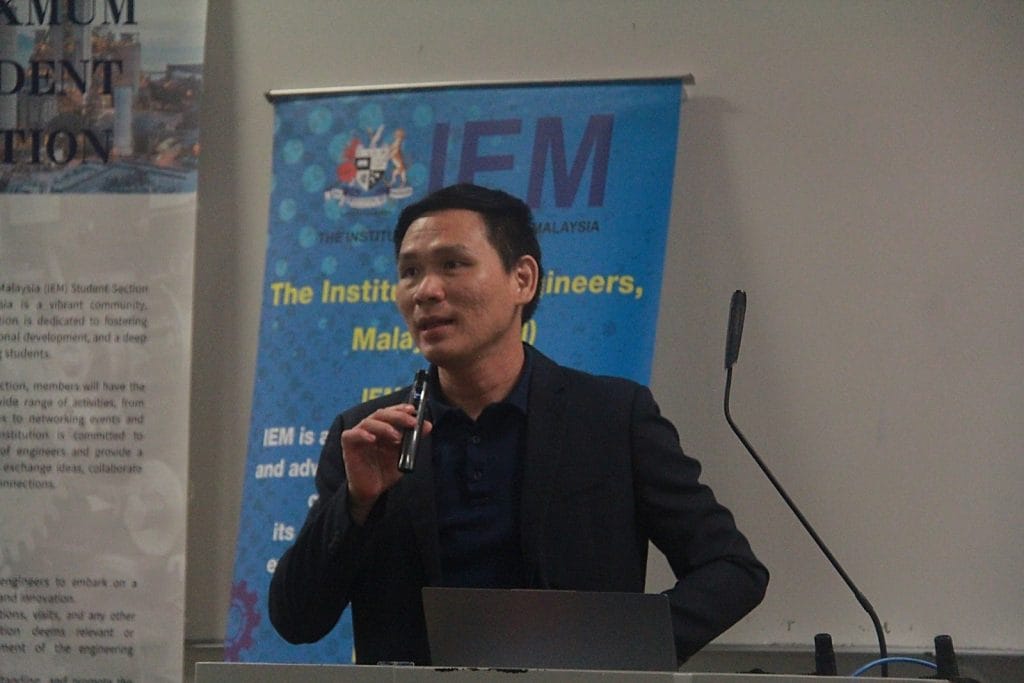



Why STEM Professionals Matter To Malaysia?


In recent conversations with parents, I have noticed a growing concern: many of their children are reluctant to pursue careers in science, technology, engineering and mathematics (STEM). A common reason cited is insecurity about long-term career prospects. Some young people worry that STEM professions may become obsolete in an era shaped by the gig economy, automation and artificial intelligence.
This perception, however, could not be further from the truth.
Engineering and technology are among the oldest professions known to humankind. Since ancient times, humans have relied on engineering ingenuity to develop fundamental tools such as the wedge, lever, wheel and pulley, innovations that laid the foundation for civilisation. Fast forward to today, engineers and technologists remain at the heart of modern society. They design, build, operate and improve the systems that power our daily lives, from clean water and electricity to digital connectivity and transportation.
More importantly, engineers and technologists are central to solving some of the world’s most pressing challenges, including climate change, resource scarcity and sustainable development. As Malaysia modernises its infrastructure and transitions towards a greener, more digital economy, the role of engineering and technology is not diminishing, it is expanding.
High Demand for STEM Professions
Malaysia appears to be performing well in STEM education. According to UNESCO, Malaysia has one of the highest proportions of higher education graduates with STEM degrees globally. However, a closer look reveals a different picture. In 2024, Malaysia’s STEM graduates per 100,000 population are estimated to be only around 280. By comparison, advanced economies such as South Korea, Germany, France and the United Kingdom produce between 560 and 780 STEM graduates per 100,000 population.
This gap highlights a critical reality: Malaysia still faces a significant shortage of STEM talent, particularly as the nation aspires to become a high-tech and innovation-driven economy.
Looking at the broader workforce landscape, skilled occupations have consistently made up only 20–30 per cent of Malaysia’s total workforce, based on data from the Department of Statistics Malaysia. Importantly, this category includes non-STEM professions such as accountants, lawyers and business professionals, suggesting that the actual share of engineers and technologists is significantly lower than headline figures imply.
Against this relatively modest baseline, Malaysia’s target to generate 70 per cent of jobs in STEM-related fields by 2030 signals a bold and transformative ambition. Regardless of current workforce composition, this shift points to strong, long-term demand and expanding career opportunities for STEM professionals as the country advances towards a more innovation-driven and high-income economy.
Wide Range of Career Opportunities
From process engineers and plant technologists in manufacturing, to semiconductor design engineers, renewable energy specialists, data engineers and sustainability professionals, technologists and engineers contribute across virtually every sector of the Malaysian economy. They work in industries such as electrical and electronics, oil and gas, palm oil and bio-based industries, construction, healthcare, digital technology and clean energy, often at the intersection of innovation, safety and sustainability.
Malaysia has emphasised the urgent need for stronger STEM talent development to enable the country to transition from being primarily a technology user to becoming a technology developer. In particular, the nation is targeting the development of 60,000 high-skilled professionals for the semiconductor industry by 2030, reflecting Malaysia’s strategic ambition to strengthen its position across the global semiconductor value chain.
This talent demand is further institutionalised under the National Industrial Master Plan 2030, which sets out a roadmap to transform Malaysia into a high-value, technology-driven and sustainable manufacturing economy. STEM capabilities are identified as a core enabler supporting Malaysia’s industrial ambitions, underscoring the long-term relevance of engineers and technologists across emerging and future-facing industries.
STEM Professionals Are Highly Regarded
According to TalentCorp and the Institute of Labour Market Information and Analysis under the Ministry of Human Resources, many STEM-related roles are listed among the most critical occupations in the Critical Occupations List 2024/2025. This list is developed based on extensive employer data, offering a grounded and industry-driven view of the skills and professions most needed in the Malaysian economy.
STEM professionals are valued for their ability to solve complex problems, apply structured thinking and translate ideas into practical solutions. Engineers and technologists are often entrusted with responsibilities that directly affect public safety, environmental protection, economic competitiveness and national resilience. Their work underpins trust, trust in infrastructure, trust in technology and trust in progress, which is why STEM professions continue to command respect across industries and society.
Given the rapid pace of scientific and technological advancement, STEM professions will remain among the most in-demand careers in Malaysia for decades to come. Engineers and technologists will play an even more critical role as the country navigates the challenges of industrial transformation, climate change, population growth and global competition.
Engineering and technology are not sunset professions—they are future-defining ones. It is time we spark renewed confidence and excitement around STEM careers and inspire the next generation to see engineering and technology not as risky choices, but as meaningful pathways to shaping Malaysia’s future.
The author is a chartered engineer and chartered environmentalist, is a Fellow of the Institution of Chemical Engineers, the Royal Society of Chemistry, and the Malaysian Institute of Management. He is also the founder of the Research Institute for Sustainable Excellence and Leadership (RISEL).
Source : https://www.businesstoday.com.my/2026/02/01/why-stem-professionals-matter-to-malaysia/